

Research.
My PhD research focuses on the relationship between music-making, learning and wellbeing, as experienced by employees in workplace contexts.
Find out more below.
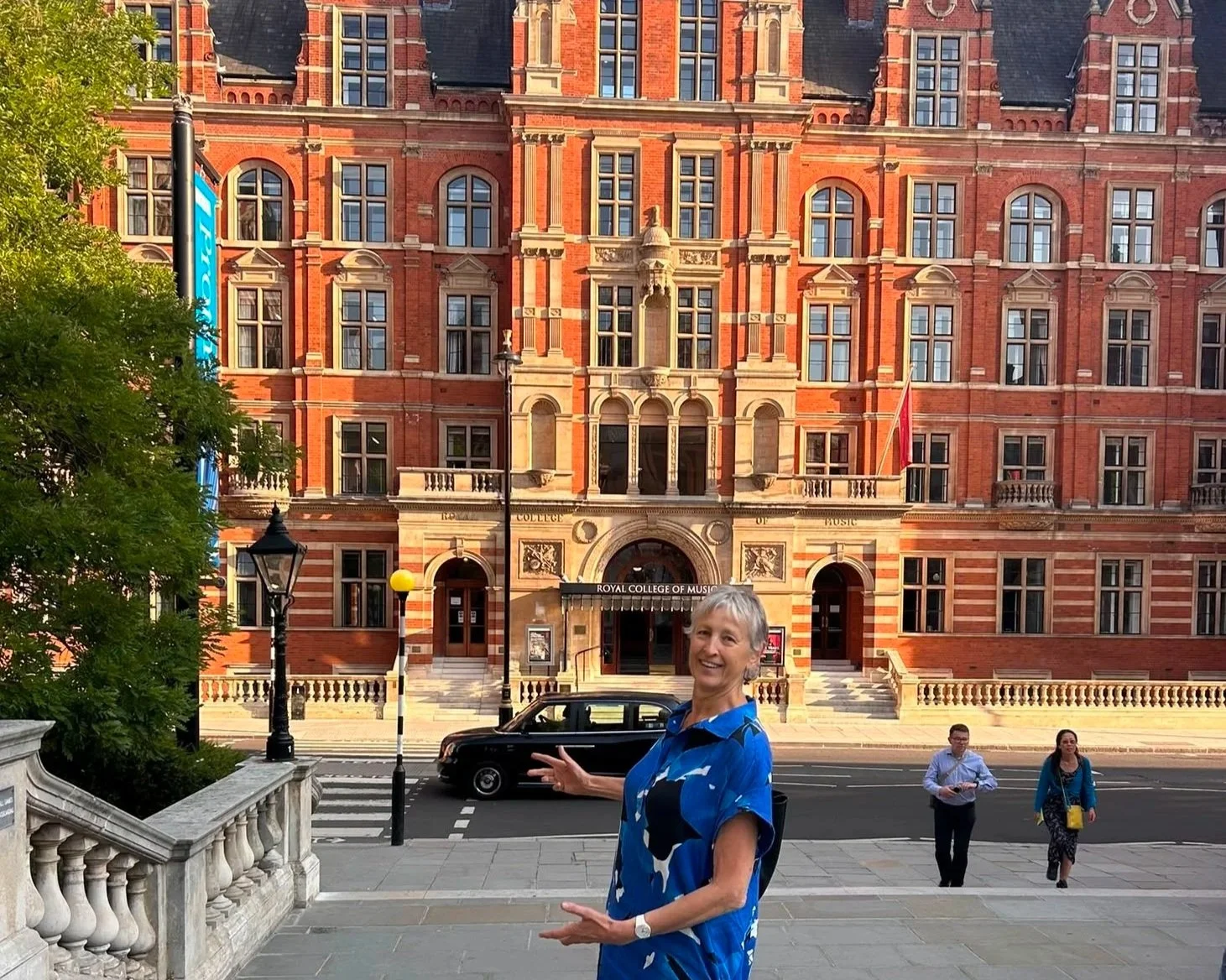
The what, why, how and “so what?” of my research.
-
The experiences of employees who participate in music-making and learning at work.
-
The first stage of the PhD was to review existing literature and evidence in order to identify a gap in the research. The many benefits of music-making for a wide range of people from young children to the elderly and those with particular needs are well-established. At the same time there is a high level of concern about wellbeing at work but a lack of research into the possible wellbeing benefits of workplace-based music-making in the UK – here lies the research gap. Creative activities feed into wellbeing and music-making in particular lights up our brains like no other activity and keeps them young!
-
Having identified the research gap, I had to decide exactly what my research methods would be. I’m using a qualitative approach for research in “real-world” context -this is accepted as the most useful way to capture the complexity and nuance of peoples’ experiences in specific situations. The first phase of data collection consists of a series of semi-structured interviews with people who have access to music-making at work – in a finance company in London, and in an NHS hospital choir.
Having my case to the RCM’s research department, I had to apply to the Royal College of Music’s Ethics Committee for a certificate of approval before going ahead. This entailed providing a detailed account of “what, why and how” for every stage of the research - a lengthy and tortuous process but necessary! It helped me to focus on exactly what I wanted to find out and to streamline my approach to data collection.
-
I’ll use the principles of Reflexive Thematic Analysis to identify and interpret significant themes from within the data and I’ll design one or two further phases of data collection, based on these initial findings.
-
Why am I doing this? why should anyone care? Because, based on what we know about the multiple benefits of music-making at any level, I believe music-making should be recognised and made available as a normal, regular activity, with the potential to make a valuable contribution to the wellbeing of adults at work on a par with sport.
In 2020 I completed an MSc in Performance Science at the Centre for Performance Science (a partnership between the Royal College of Music and Imperial College, London). My dissertation investigated the possible effects on well-being, stress and creativity of having access to music-making and learning in the workplace.
The results were very positive as described in this article published in Music Teacher in March 2021.
In September 2023 I began a PhD exploring this subject in greater breadth and depth. I believe that music-making is important for people in their everyday lives, providing a vital key to wellbeing in supporting people’s ability to connect better both with themselves and with others, and so contributing to a sense of wholeness.
The link between participatory musical activity and improved health and wellbeing has been amply demonstrated in recent research. Active music-making makes a uniquely important contribution to our socialisation, wellbeing, self-realisation and personal enrichment. When playing a musical instrument more circuits of the brain are activated than in anything else we do, thus different regions of the brain are linked. Playing music enhances brain plasticity (the ability to learn) through the lifespan and encourages whole-brain thinking, stimulating greater use of imagination and creativity. Music is intrinsic to human development so should be considered a universal resource.
Music learning can occur throughout the lifespan but there are both real and perceived barriers to adult participation: opportunities may be limited and people often struggle to identify as musical, even though it’s now recognised that everyone has degree of musicality.
The value-laden concept of “talent” is increasingly seen as outdated: the idea of “talented” people creating music for the “untalented” is false and robs many of the ability to believe in their own musicality. In many cultures, active musical participation is a normal part of life for all and makes an important contribution towards personal and social integration.
Although so many people would like to learn to play an instrument (or keep playing), there are barriers to them achieving this, including the lack of opportunity and the need for appropriate teaching and support which recognises the different needs of adults. Looking into how this could be remedied is the subject of my research in the hope of increasing access for mid-life adults to the life-enhancing benefits that music-making affords.
In collaboration with

coachhousepianos.co.uk